If an Uber or Lyft crash hurt you in Houston, you need a Houston rideshare accident lawyer who understands how these claims actually work. The insurance that applies depends on what the driver was doing in the app when the crash happened. That one fact can move the liability limits from $50,000 per person to a $1 million per-incident limit. Joe I. Zaid & Associates represents injured riders, rideshare drivers, and other motorists hit by Uber and Lyft vehicles.
Rideshare crashes follow the same negligence rules as other car accident claims, but they add layers. The driver’s personal policy, the rideshare company’s policy, and the other driver’s policy can all play a role. Each insurer has a reason to point at someone else. We sort out which policy applies, document the app data that proves it, and build your claim around the right coverage.
Call (346) 340-0800 for a free consultation with our Downtown Houston office. You can also request a free case review online. We handle rideshare injury cases on a contingency fee basis, so you owe no attorney fees unless we recover compensation for you.
Why Choose a Houston Rideshare Accident Lawyer From Joe I. Zaid & Associates
Joe Zaid founded the firm in 2013 after nearly a decade working inside the insurance industry. That background matters in rideshare cases. The hard part is rarely proving the driver made a mistake. The hard part is figuring out which insurer owes what, and how long each one can delay answering you.
Joe graduated from South Texas College of Law Houston and earned a 2026 Super Lawyers selection. He is an active member of the Houston Trial Lawyers Association and the Texas Trial Lawyers Association. Clients have left more than 1,500 five-star Google reviews across our four offices. Their feedback centers on communication, responsiveness, and having someone explain what comes next.
We start building a case on day one. We confirm liability and insurance coverage early instead of waiting for treatment to end. In a rideshare case, that means pinning down the driver’s app status at the moment of impact. It also means finding every policy that could respond. We send preservation letters while the records are still easy to request.
Our Experience With Commercial Coverage and Company Liability
Neither result below involved a rideshare vehicle. Both turned on questions that rideshare victims face: who besides the driver bears responsibility, and which policy pays?
Looking Past the Driver to the Company
In a $455,000 commercial vehicle settlement, a private ambulance driver ran a stop sign, rear-ended our client, and left the scene. The client had mid back and shoulder pain and needed two injections. The insurer first judged the claim from the medical records alone and made a low offer.
We did not negotiate against that offer. We reviewed the driver’s background, which showed a lengthy criminal history and multiple prior accidents. Then we examined the company that put him on the road. Once the driver’s history connected to the hiring decision, the original offer no longer reflected the full picture.
Rideshare claims raise the same question about the company behind the driver. The answer depends on the facts and the legal relationship involved. We apply that scrutiny across commercial vehicle accident claims.
Separating Your Claim From a Group Valuation
In a $134,000 company truck settlement, a company truck rear-ended our client’s vehicle in a drive-thru line. The crash happened on private property, so no police report existed. A third party proposed $20,000 to cover everyone in the client’s vehicle.
We rejected the combined offer and valued our client’s injuries on their own. We confirmed the commercial insurance policy tied to the truck. We documented the crash with other evidence, including the driver’s account. The client received $134,000.
Rideshare crashes often involve several people in one car. Each person’s injuries deserve their own valuation, and a single group figure can hide that.
Past results do not guarantee or predict a similar outcome in future cases. Every case depends on its own facts.
How Uber and Lyft Insurance Works in Texas
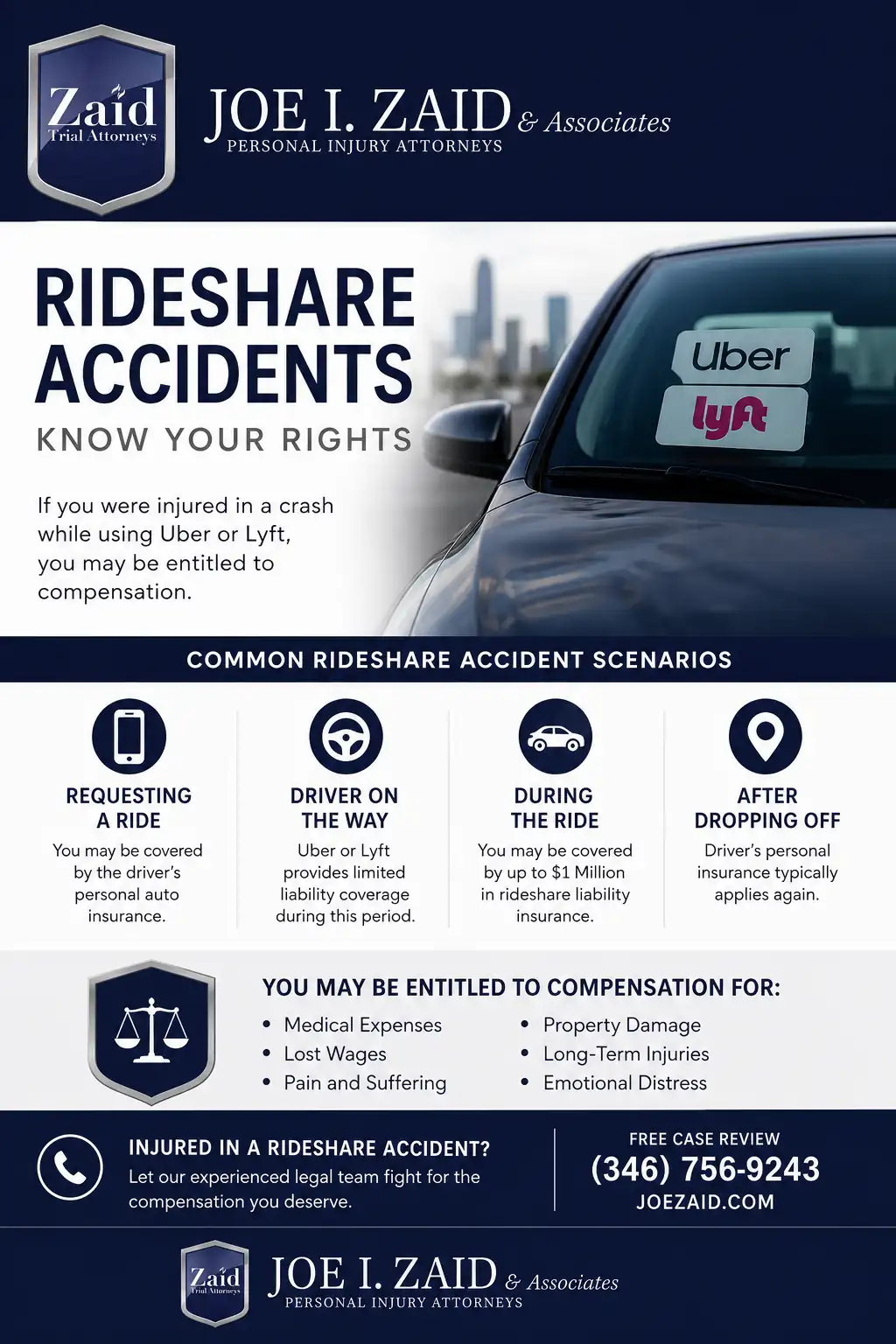
Texas sets minimum insurance tiers for rideshare drivers in Chapter 1954 of the Insurance Code. The required amount depends on what the driver was doing in the app. Insurers fight over these tiers, so each one matters.
App Off: The Driver’s Personal Policy
When the driver is not logged on to the app, the driver’s personal auto policy governs. Texas requires ordinary liability policies to carry at least $30,000 per person, $60,000 per accident, and $25,000 for property damage. Those limits can fall short quickly after a serious injury.
App On, No Ride Accepted
A driver may be logged on and waiting for a request. In that window, the required policy must provide $50,000 per person for injury or death. It must also provide $100,000 per incident and $25,000 for property damage. Uber and Lyft both describe this tier in their published coverage information. Uber states it does not carry collision or comprehensive coverage for the driver’s vehicle at this stage.
Ride Accepted Through Drop-Off
From acceptance until the passenger leaves, the required policy must provide $1 million total per incident for death, bodily injury, and property damage. Uber’s coverage page lists liability of at least $1,000,000 once a driver heads to pickup or starts a trip. Lyft’s help center publishes the same figure for most markets.
Two details deserve attention. First, the statute requires the coverage to be primary, and the driver, the company, or both together can supply it. Second, the $1 million is one aggregate limit for the whole incident. If a crash hurts several riders and people in other cars, they may share it.
Uninsured Motorist Coverage and Injury Protection
The statute also calls for uninsured and underinsured motorist coverage and personal injury protection. It ties both to other Insurance Code provisions. Uber says it maintains UM/UIM for rideshare in states where law requires it. Lyft says its first-party coverage may include uninsured motorist coverage.
Neither statement tells you what a specific Houston rider or driver actually has. We read the policy to find out. Suppose an uninsured driver in Houston caused the crash. UM/UIM coverage may then carry more of the claim than any policy the at-fault driver holds.
Which carrier answers your claim can also change the process. We handle Progressive Uber insurance claims and Farmers Lyft insurance claims, and each insurer sets its own claim steps and timelines.
Who Can Be Responsible After a Houston Uber or Lyft Crash
Liability in a rideshare crash rarely stops at one name. We evaluate every possible source of recovery before any insurer shapes the story.
The Rideshare Driver
If the driver caused the crash, the driver’s negligence is the starting point. Distraction is a common allegation, because rideshare drivers work with a trip app while they drive. Phone records and app activity can help prove a driver was distracted.
Another Motorist
In some Houston rideshare crashes, a different driver caused the collision. That driver’s liability policy comes first. Texas minimum limits are only $30,000 per person, so a serious injury can outrun the policy fast. That is where UM/UIM coverage and the rideshare policy may matter.
The Rideshare Company
Uber and Lyft describe their drivers as independent third-party providers. Uber’s terms state that it does not transport passengers and does not control drivers. We test those labels against the facts. A direct claim against the company depends on the evidence and the legal theory. Negligent hiring and negligent entrustment are two examples.
Vehicle Owners and Other Third Parties
Some drivers use vehicles they do not own. The owner of the vehicle can become part of the claim. A repair shop or manufacturer can also enter the picture when a mechanical defect contributes to the crash.
Claims for Riders, Rideshare Drivers, and Other Motorists
Rideshare Passengers
Passengers usually carry the least blame in a crash. That gives them the most claim options. A passenger may claim against the rideshare driver’s coverage, the other driver’s policy, or both. The challenge is working out which limit applies and how many people share it. Injuries, medical bills, and available limits drive what passengers can expect to recover.
Rideshare Drivers
Injured drivers face a different map. App status changes which coverage applies. Uber and Lyft both publish a $2,500 deductible for contingent coverage on the driver’s own vehicle. Both tie that coverage to the driver’s personal comprehensive and collision policy. A side-impact collision while driving for Uber shows how fast those questions pile up.
Lost income matters too. A driver’s earnings change from week to week. We document them from app earnings statements and tax records instead of a pay stub.
Other Motorists, Cyclists, and Pedestrians
People outside the rideshare vehicle often need the most help. They never saw the app and know nothing about its coverage. If a rideshare driver heading to a pickup hit you, the $1 million tier may apply. If the driver was logged on without a trip, the lower tier may apply. We find out which before anyone asks you for a statement.
Common Causes of Houston Uber and Lyft Accidents
Rideshare drivers face many of the same hazards as other Houston motorists, with added distractions from navigation, ride requests, and frequent pickups. The cause of the crash determines what evidence we need and who may be responsible.
- Distracted driving: Checking ride requests, following GPS directions, texting, or looking away from traffic can cause a collision. App activity and phone records may help establish distraction.
- Speeding and aggressive driving: Driving too fast for traffic conditions, following too closely, or making unsafe lane changes can cause serious crashes on Houston freeways and city streets.
- Driver fatigue: Long hours behind the wheel can reduce alertness and reaction time. Trip histories and driving records may help establish whether fatigue contributed.
- Drunk or impaired driving: Alcohol, drugs, and certain medications can affect judgment and reaction time. These crashes may involve additional liability questions addressed by our drunk driving accident attorneys.
- Poor weather and road conditions: Heavy rain, standing water, and reduced visibility demand greater care. Drivers can still be responsible when they fail to adjust their speed or driving to the conditions.
Whether your crash happened near Downtown, Midtown, the Galleria, Hobby Airport, or another busy Houston destination, we investigate the driver’s conduct and the conditions surrounding the collision rather than relying solely on the police report.
How Insurers Fight Over Rideshare Coverage
Trip status sits at the center of most coverage fights. One insurer says the driver was off the app. Another says the driver was logged on without a trip. A third says a passenger was in the car. Each answer changes who pays and how much.
Texas law lets a driver’s personal auto insurer exclude losses that happen while the driver is logged on or on a prearranged ride. An insurer that defends an excluded claim can seek contribution from another insurer that covers the driver. Carriers settle that among themselves. Injured people wait.
Texas also requires information sharing during a claim investigation. The company and its insurer must assist each insurer involved. They must provide information to directly interested persons and to the driver’s insurer. That information must include the precise times the driver logged on and off the network during the 12 hours before and after the accident. It must also include a clear description of the coverage, exclusions, and limits. We request this early.
Joe’s years inside the insurance industry help us anticipate how carriers delay and dispute claims. That experience shapes how we push for coverage answers in the first weeks of a case.
Adjusters may also call within days and ask for a recorded statement. Their questions can lock in details about your injuries and the trip before anyone confirms which policy applies. Offers can also arrive before anyone knows the full extent of your injuries, so it helps to ask whether the first settlement offer is worth accepting. We review both with you before you respond.
How We Build a Houston Uber or Lyft Accident Claim
A rideshare claim needs a plan before the first adjuster call. We build ours around a coverage map and a clear order of operations.
Start With a Coverage Map
We list every policy that could respond. That includes the rideshare driver’s personal policy, the company’s required coverage at the right tier, and the other driver’s liability policy. It also includes UM/UIM coverage, medical payments or injury protection, and your own policies. Then we confirm the limits on each one. We confirm limits early because they set the settlement strategy.
Lock Down the Trip Record
Trip status decides the tier, so we treat it as the first fact to prove. We ask for the log-on and log-off times that Texas requires carriers to share. We send preservation letters to the company, the driver, and any property owner who may hold video. We compare those records with the crash report to catch mismatches.
Match Treatment to the Claim
We work with your medical providers to help you get the care you need. We explain why consistent treatment and clear records matter to the claim. We do not give medical advice. We help you understand how gaps, delays, and missed appointments can affect how an insurer values your injuries.
Prepare as if the Case May Need a Lawsuit
Most claims settle, but we build every file as one that may not. That means a record a jury can follow and a demand backed by proof of coverage, liability, and damages. That preparation lets us negotiate from a stronger position. If an insurer refuses to treat the claim fairly, the file is ready to escalate.
Evidence That Matters in a Rideshare Case
Rideshare crashes produce digital proof that ordinary crashes lack. We go after it early.
- App and trip data: Trip status, acceptance time, pickup and drop-off times, and the GPS route show what the driver was doing. We request these records through a preservation letter and the claim process.
- Driver phone use: Phone records and app activity can show whether the driver handled a device in the moments before the crash.
- Dashcam video: Some rideshare drivers run cameras. Dashcam footage can show fault and what happened inside the vehicle.
- Crash reports: If the Houston Police Department investigates, HPD says reports need 5 to 8 days of processing before the public can get them. You can also buy a CR-3 report through the Texas Department of Transportation. A report can list the wrong trip status or miss the app entirely, so we check it against the app records and look for errors in the police report.
- Property video: Some Houston trips start or end on private property. Houston Airports, for example, sends Uber and Lyft pickups at IAH to marked Ride App areas outside baggage claim. Pickups near hospital campuses, hotels, and garages in places like the Texas Medical Center and Downtown also sit on property that someone else controls. That owner or operator may hold video. We identify early who controls the property near a crash and ask them to preserve it.
- Medical records: Consistent treatment and clear records show how the crash changed your life. They also affect who pays your medical bills while the claim is open.
Texas Deadlines and Fault Rules That Affect Rideshare Claims
The Two-Year Filing Deadline
Texas generally gives you two years from the accident to file a personal injury lawsuit under Civil Practice and Remedies Code Section 16.003. A wrongful death claim also has a two-year clock, which runs from the date of death. Missing a deadline can end a claim, which is why Texas statutes of limitations matter even while insurers are still talking.
Rideshare claims add a second wrinkle. Both companies’ published rider terms contain arbitration provisions for disputes with the company, and Uber’s terms list specific exceptions. Those terms can affect where a claim against the company gets heard. We review them early because they can change strategy.
Shared Fault Under Texas Law
Texas follows a proportionate responsibility rule in Chapter 33 of the Civil Practice and Remedies Code. If a jury finds you more than 50 percent responsible, you cannot recover damages. If your share is 50 percent or less, the jury reduces your recovery by your percentage.
Rideshare cases invite finger-pointing. Defendants often blame each other. A defendant can also ask the court to designate a responsible third party. That designation can spread fault to someone who is not in the lawsuit. Passengers rarely carry fault, but defendants test every angle. We answer with early evidence and a clear view of how comparative negligence in Texas can change a claim.
Common Injuries in Houston Rideshare Accidents
Uber and Lyft crashes can cause injuries ranging from temporary pain to permanent disability. Passengers may be especially vulnerable when they are seated in the back of the vehicle or struck from the side. Common injuries include:
- Traumatic brain injuries: Concussions and more severe brain injuries can cause headaches, memory problems, dizziness, and lasting cognitive difficulties.
- Spinal cord and back injuries: Herniated discs, fractured vertebrae, and spinal cord damage can lead to chronic pain, limited mobility, or paralysis.
- Broken bones and fractures: Injuries to the arms, legs, ribs, hips, and pelvis may require surgery, rehabilitation, or extended time away from work.
- Neck and soft tissue injuries: Whiplash, muscle strains, and ligament damage can cause symptoms that develop hours or days after the collision.
- Internal injuries: Blunt-force trauma can damage internal organs or cause bleeding that requires emergency treatment.
- Psychological injuries: Serious crashes may cause anxiety, emotional distress, or lasting trauma that affects daily activities and the ability to travel comfortably.
Some injuries result in permanent physical impairment, disfigurement, or significant mental anguish. We document these losses alongside medical expenses, lost income, and future treatment needs. The severity of the injury and its impact on your life help determine the compensation you may recover.
What Affects the Value of a Houston Rideshare Claim
We do not predict a number without the facts. A rideshare claim’s value tracks a few things that ordinary crashes do not always raise.
- The coverage tier: A trip in progress can unlock a $1 million limit. A logged-on driver without a trip can leave $50,000 per person on the table. The fight over trip status is often a fight over value.
- Shared limits: When several people share one aggregate limit, each person’s recovery depends on how the injuries compare. A crash that hurts three riders and two people in another car can strain even a $1 million limit.
- Injury and treatment: Surgery, injections, therapy, and long-term care raise the stakes of every coverage question. Consistent records show insurers what the injury cost you.
- Driver income: Lost earnings for a working rideshare driver need careful proof, because weekly income varies.
- Other sources of recovery: When injuries exceed the first policy, we look at UM/UIM coverage, additional policies, and additional responsible parties.
Serious injuries can push a claim past the first policy. That is why we confirm limits early and keep looking for coverage that could add to a recovery. We never promise a result. We build the claim so the number reflects the injury, the proof, and the policy that responds.
What to Do After a Houston Uber or Lyft Crash
- Get medical care and mention the rideshare trip. Tell the provider how the crash happened so the records match the story.
- Screenshot the trip. Save the receipt, trip status, driver name, plate number, and vehicle details before the app changes.
- Document the scene. Photograph the vehicles, the road, and your injuries. Get names for witnesses and the other driver’s insurance.
- Report the crash. Tell the police what happened and report the crash in the app. Stick to facts.
- Hold off on statements and releases. Speak with an attorney before you give a recorded statement or sign anything.
- Keep your own record. Save messages with the driver and the company. Note symptoms and missed work, and avoid posting about the crash.
Houston Rideshare Accident Lawyer FAQs
How much does a Houston rideshare accident attorney cost?
We offer free consultations and handle rideshare injury cases on a contingency fee basis. You owe no attorney fees unless we recover compensation. Rideshare cases follow the same model as car accident lawyer fees in Texas generally.
How long does a rideshare accident claim take?
It depends on the injuries, the coverage, and whether insurers dispute the trip status. A coverage fight can add time. A claim that needs a lawsuit takes longer, and how long it takes to settle a personal injury lawsuit turns on whether the case reaches litigation.
Can I still recover compensation if I already gave a recorded statement?
Yes. Giving a recorded statement to an Uber, Lyft, or insurance company adjuster does not automatically prevent you from recovering compensation. However, insurers may use your answers to challenge your account of the crash, your injuries, or the driver’s responsibility.
If you already gave a statement, tell your attorney what you said and request a copy of the recording or transcript if available. We can compare it with the other evidence and address any inconsistencies before settlement negotiations or litigation.
Should I report the crash to Uber or Lyft?
Reporting through the app is reasonable. Stick to basic facts about what happened and who was involved. Do not guess about fault or injuries, and do not give a recorded statement to any insurer before you understand your options.
What if the rideshare driver caused the crash but has no personal insurance?
The statute requires the driver or the company to maintain primary coverage. If the driver’s personal policy excludes rideshare use, the company’s required coverage may respond. We review the policies and the app data to find which coverage applies.
What if a rideshare driver assaulted me?
An assault is a different kind of claim from a collision. It raises its own questions about the driver and the company. The steps after being assaulted in a rideshare in Texas differ from the steps after a crash.
What if the vehicle had no driver?
Waymo began public driverless rides in Houston in February 2026, KERA News reported. Axios reported that the service area nearly doubled that May. Driverless vehicles raise different liability questions, and we handle Waymo accident claims as well.
Talk With a Houston Rideshare Accident Attorney Today
If an Uber or Lyft crash hurt you, a Houston rideshare accident attorney on our team can review your case at no cost. We will look at the trip data, the coverage, and your injuries. Consultations are free, and we charge no attorney fees unless we recover compensation. Rideshare cases are one part of the injury work our Houston personal injury attorneys handle.
Our offices are open 24 hours daily:
- Downtown Houston office: 1001 Texas Ave Suite 1400, Houston, TX 77002, (346) 340-0800
- Pasadena office: 4701 Preston Ave, Pasadena, TX 77505, (346) 756-9243
- Clear Lake office: 16821 Buccaneer Ln #226, Houston, TX 77058, (346) 690-0500
- Humble office: 5616 Farm to Market 1960 Rd E Suite 290D, Humble, TX 77346, (346) 594-0500