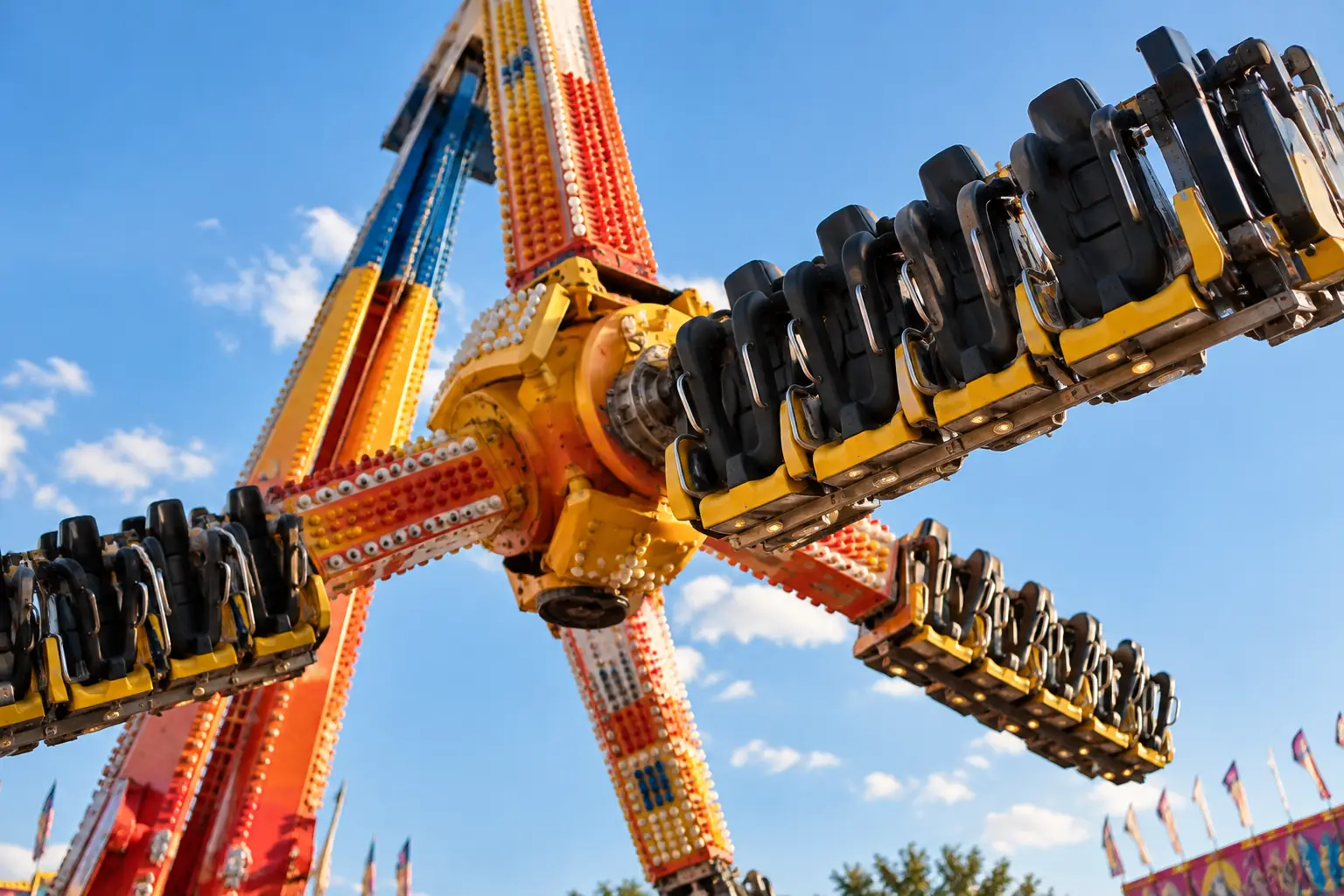
Responsibility for a ride malfunction can fall on more than one party. The park or ride operator usually sits at the center because it runs and maintains the ride. Depending on the cause, a maintenance contractor, the ride manufacturer, a component maker, or an installer may share the blame. The cause of the failure decides who belongs in the claim.
That cause usually falls into one of two groups. Negligent operation or maintenance points toward the people who ran and serviced the ride. A defective design or manufacturing flaw points toward the companies that built it. Many malfunctions involve both. If a ride hurt you or a family member, our attorneys offer a free consultation. We can help sort out who may be responsible.
Why the Cause of the Malfunction Controls the Claim
A ride never simply malfunctions. Something specific fails. A restraint may not lock, a brake may not engage, or a track component may crack. An operator may also dispatch a ride before a rider is secure. Each failure points toward a different party, and each follows different legal rules.
Two legal paths matter most. A negligence claim asks whether someone failed to use reasonable care when running, inspecting, or repairing the ride. A product liability claim asks whether the ride or one of its parts was defective when it left the manufacturer. One injury can support both, and the evidence for each looks very different.
Liability for Negligent Operation or Maintenance
The Park or Ride Operator
The operator controls how the ride runs each day. That includes training staff, checking restraints, enforcing height and weight rules, and shutting a ride down when something seems wrong. When an operator skips a step or ignores a known problem, a negligence claim may follow.
Operators also answer to written rules in Texas. Chapter 2151 of the Texas Occupations Code requires covered rides to get an inspection at least once a year. The ride’s insurer or a person the insurer hires performs it. The inspection must check critical parts that the manufacturer identifies as likely to fail from wear. If a ride needs repair or replacement, the owner or operator must finish that work before offering the ride to the public. Operators must also record each ride injury that causes death or requires medical treatment. They must file quarterly injury reports with the insurance commissioner.
Not every attraction falls under the statute. Coin-operated rides, nonmechanized playground equipment, and certain small vinyl waterslides are excluded.
These records give investigators a starting point. When a rider gets hurt, a theme park injury attorney usually looks first at the operator’s records. Those include inspection certificates, daily checklists, training records, and prior incident reports. A passed annual inspection does not prove the ride was safe on the day of the injury. Day-to-day records can matter as much as the certificate.
Texas law also separates claims about a dangerous condition on property from claims about how someone carried out an activity. A worn part on a ride may look like a condition problem. An operator who rushes a loading procedure looks more like an activity problem. The label can change what the injured person must prove, so the facts behind the malfunction shape the legal theory.
Maintenance Contractors and Inspectors
Many parks hire outside companies to service brakes, hydraulics, electrical systems, and restraints. A contractor that repairs a part incorrectly, installs the wrong replacement, or ignores visible wear may share responsibility with the park. An outside inspector may face a claim too if the inspector missed damage that a proper inspection should have caught. Those claims depend heavily on the contract and the facts.
Work orders, parts invoices, manufacturer service bulletins, and technician training records can show who touched the ride and what they did. Those documents often sit with the contractor, not the park.
Carnival Companies, Event Hosts, and Landowners
Rides at county fairs, church festivals, and similar events often belong to a traveling carnival company. Chapter 2151 treats these mobile rides separately because operators move them from site to site. When a mobile ride fails, the company that assembled and ran it comes first. Depending on the contracts and who controlled the site, the event organizer or the property owner may also carry some responsibility.
Liability for Defective Ride Design or Manufacturing
Sometimes the people running the ride did everything right and the ride still failed. Product liability claims target the companies that put a defective product on the market. Under Chapter 82 of the Texas Civil Practice and Remedies Code, a manufacturer includes designers, fabricators, and assemblers. The law reaches makers of a finished product and makers of a component. A ride manufacturer, or the maker of a failed restraint, bearing, or control system, may face a claim.
Defect claims usually fall into three groups.
- Design defect. The design itself creates an unreasonable risk. In Texas, the injured person must prove that a safer alternative design existed and that the defect was a producing cause of the injury. That alternative must have been technologically and economically feasible when the product left the manufacturer’s control.
- Manufacturing defect. A specific part or unit does not match its intended design, such as a flawed weld or the wrong material.
- Inadequate warnings or instructions. The manual or labels leave out a hazard or maintenance step that operators needed to know.
Companies that sold a ride without making it get more protection. A seller that did not manufacture a product generally faces liability only in listed situations. Examples include altering the product, installing it, or helping design it. A seller may also face liability when the manufacturer is insolvent or the court cannot reach it. Changes a park makes to a ride can matter too. A manufacturer may argue that the alteration, not the original design, caused the failure.
Proving a defect often requires engineering analysis of the failed part. That makes physical evidence critical.
Why Several Parties Often Share Responsibility
Real malfunctions rarely have one clean cause. A manufacturer may design a bolt that tolerates less wear than it should. A contractor may fail to replace it on schedule. An operator may keep running the ride after staff notice an unusual noise. Each party contributed, and each may point at the others.
Texas handles this through proportionate responsibility. Under Chapter 33 of the Civil Practice and Remedies Code, the jury assigns a percentage of responsibility to several people. Those people include the injured person, each defendant, each settling person, and each designated responsible third party. A liable defendant generally pays only its own percentage. A defendant becomes liable for the full amount only when its share exceeds 50 percent.
Two consequences follow. First, a defendant can ask the court to designate a responsible third party that the injured person did not sue. The motion generally must come at least 60 days before trial. A park can therefore blame a manufacturer that the injured person never named. Any percentage a jury assigns to a company that is not a defendant is a share the injured person cannot collect.
Second, the injured person’s own conduct counts. A rider who ignored posted restrictions or safety instructions may face a share of the blame. Texas bars recovery when that share exceeds 50 percent, and a lower share reduces the award. Understanding how comparative negligence works in Texas helps explain why each party’s percentage matters so much.
This is why our attorneys do not stop at the most obvious party. We secured an $85,000 premises liability settlement for a client whose shopping cart caught on a new, unmarked step. A construction crew had installed the step at a store entrance. Responsibility could rest with the store, the construction company, or both. We evaluated whether the construction company shared the blame instead of treating the store as the only target. Past results do not guarantee or predict a similar outcome in future cases.
How Investigators Pin Down the Cause
Finding the cause takes evidence from several companies at once, and much of it sits outside the injured person’s reach. The most useful records usually include:
- Maintenance logs, work orders, and parts replacement records
- Annual inspection certificates and daily pre-opening checklists
- Operator training records and the ride’s operating manual
- Prior incident reports, injury reports, and rider complaints
- Manufacturer service bulletins and design documents
- Ride control data, if the ride records it, plus video and witness accounts
- The failed part itself
The part matters most and disappears fastest. Parks repair rides quickly to reopen them, and a park can replace, clean, or discard a damaged component in days. We may send preservation letters early to the operator, any maintenance contractor, and the manufacturer. Each one then knows to keep the evidence. Early preservation lets an engineer examine the part before anyone changes it.
Each responsible party usually has its own insurance, and coverage can differ widely. Texas sets minimum coverage for Class B rides, which include any ride other than a fixed-location children’s ride. The minimum is $1,000,000 in bodily injury coverage and $500,000 in property damage coverage per occurrence, or a $1,500,000 combined single limit. Limited exceptions exist. Those figures are minimums, not limits, and they do not control a manufacturer’s own policy. Joe Zaid spent nearly a decade working inside the insurance industry before founding our firm. That background helps our attorneys identify which carriers and policies may apply to each party.
Deadlines That Affect Who You Can Pursue
Texas generally gives injured people two years to file a personal injury lawsuit. Other deadlines can arrive sooner or cut off specific defendants.
When a city or another governmental unit owns or runs the attraction, the injured person generally must give written notice of the claim within six months. An exception applies if the governmental unit already knew about the injury. Product claims also face a statute of repose. It generally bars a suit against a manufacturer or seller filed more than 15 years after that defendant sold the product, with limited exceptions. Rides often last for decades, so the sale date can matter.
When to Speak With an Attorney
Working out who is responsible for a ride failure takes fast, coordinated effort. The ride may reopen, the records may sit with several companies, and each party’s insurer will build its own account. If a ride hurt you or someone you love, Joe I. Zaid & Associates offers free consultations. We handle injury cases on a contingency basis, so you owe no attorney fees unless we recover compensation.