

If your child was hurt because a car seat failed to work the way it was designed to, you may have a product liability claim against the seat’s manufacturer, distributor, or seller. This applies whether the failure happened during a crash or during ordinary daily use, such as a buckle that would not release, a base that detached, or a carrying handle that gave way.
The claim does not depend on how the underlying accident happened. It depends on whether the seat itself had a defect that made it dangerous when used the way it was intended to be used. A seat that released unexpectedly, cracked under normal forces, or failed to hold together may point to a manufacturing defect, a design defect, or inadequate instructions and warnings. A closer look at the seat and what happened around the injury can usually clarify whether a claim applies.
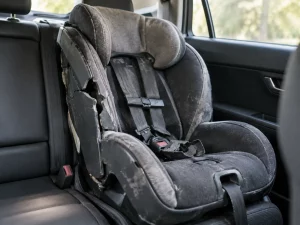
What Makes a Car Seat Defective Under Texas Law
Texas product liability law recognizes a few general categories of defects. A manufacturing defect happens when a single seat, or a batch of seats, was built incorrectly and differs from how the product was supposed to be made. Cracked plastic on a buckle housing or harness webbing stitched incorrectly are examples.
A design defect is different. It means the entire model carries a risk built into how it was designed, not just one unit. Under Capítulo 82 del Código de Procedimiento Civil y Recursos de Texas, a parent pursuing a design defect claim generally has to show that a safer alternative design existed, one that would have reduced the risk without significantly reducing the seat’s usefulness.
A marketing defect, sometimes called a failure to warn, involves missing or unclear instructions. If a seat’s harness routing, recline angle, or weight limits were not explained clearly, and that gap contributed to the injury, it may support a claim even when the seat itself was built and designed correctly.
Defects Can Show Up in a Crash or During Everyday Use
Federal child restraint standards require a seat to hold together well enough that it does not break apart in a way that could hurt a child, and to avoid any surface that could cause injury in a crash. When a seat fails to meet that basic performance in real use, it may point to a defect rather than an unavoidable result of the crash itself.
Crash-related failures can include:
- A harness buckle that releases under impact instead of staying locked
- Webbing that tears or stretches beyond its intended limits
- A seat shell that cracks or loses structural integrity
- A base or anchor connector that fails to stay secured to the vehicle
Other defects show up outside of a crash entirely. A buckle that will not release, or one that releases on its own while the vehicle is moving, creates a separate hazard. A carrying handle on an infant seat that fails can cause a fall. A base that will not stay locked to the seat itself can allow the seat to shift during normal use. These situations may still support a claim, even without a collision.
Ruling Out Misuse or an Installation Problem
Manufacturers and insurers often start by pointing to how the seat was installed or used, not the seat itself. Texas law requires children younger than eight, unless they are taller than four feet nine inches, to ride secured in a car seat installed according to the manufacturer’s instructions, under Texas Transportation Code Section 545.412. That requirement gives a baseline for what proper use looks like, which makes it easier to separate genuine misuse from a defect that would have caused a problem no matter how carefully the seat was installed.
Joe Zaid spent nearly a decade working inside the insurance industry before founding the firm, and that background is directly relevant when a manufacturer’s insurer tries to shift blame toward the parent’s installation rather than the product itself.
Check for a Recall Before Assuming It Was an Isolated Failure
Before assuming an isolated failure, check whether the exact seat, model, and manufacture date has an existing recall. NHTSA maintains a public recall database covering car seats along with vehicles, tires, and other equipment, searchable using the manufacturer, model number, and date of manufacture found on the seat’s label.
A confirmed recall does not automatically resolve a claim, and the absence of one does not rule a claim out either. Recalls typically follow a pattern of similar reports, so a seat can carry a genuine defect well before enough complaints prompt a formal recall.
Preserve the Seat and What Happened Around It
The physical seat is often the most important piece of evidence in a case like this, which is why it should not be repaired, cleaned beyond removing hazards, or thrown away after an injury. Preserving the seat, along with the box, manual, purchase receipt, and any messages exchanged with the manufacturer, matters more here than in many other injury claims, since the product itself may need to be inspected later.
Photographs of the seat’s condition, the vehicle, and the child’s injuries, along with medical records documenting the treatment received, help establish what happened and how serious the injury was.
Who Can Be Held Responsible
A products liability claim in Texas is most often brought against the manufacturer of the seat, since Texas law places most of the responsibility on the party that actually designed or built the product. A Houston product liability lawyer can help confirm which parties may be responsible before evidence becomes harder to gather, since identifying the correct manufacturer or distributor is often one of the first steps in building the claim.
Bajo Capítulo 82 del Código de Procedimiento Civil y Recursos de Texas, a retailer that only sold the seat without manufacturing it generally is not liable for a defect, unless it played a role in the seat’s design, modified it, provided inadequate warnings it controlled, or made a false representation the buyer relied on. This distinction can complicate cases involving a car seat purchased through a third-party seller on an online marketplace rather than directly from the manufacturer or a traditional retailer.
If the Injury Happened During a Car Accident
When a car seat fails while a child is in a crash caused by another driver, two separate legal issues can come up at the same time. One involves the driver who caused the accidente automovilistico, and the other involves the seat that did not perform the way it was supposed to. These claims can proceed together, and facts developed in one, such as the speed and direction of impact, often help explain what should have happened inside the seat during the crash.
Not every car seat injury involves a crash at all, which is why the type of defect, not just the presence of a collision, determines what kind of claim applies.
How Long You Have to File a Claim in Texas
Texas generally gives an injured person two years to file a personal injury lawsuit. For a child, that clock is typically paused until they turn 18, which in practice often pushes the deadline out toward the child’s 20th birthday.
Product liability claims carry an additional, separate deadline. Under Texas Civil Practice and Remedies Code Section 16.012, a products liability claim generally cannot be brought more than 15 years after the manufacturer or seller sold the product, regardless of when the injury happened. Because that outer deadline runs from the date of sale rather than the date of the injury, it is worth having a potential claim reviewed sooner rather than later, particularly if the seat is secondhand or its original sale date is unclear.
What to Do After an Injury From a Defective Car Seat
If your child was hurt because a car seat did not work the way it should have, the safest first step is to stop using it, preserve it as is, and avoid any repairs. Understanding whether a defect, a recall, or something else caused the failure usually takes a closer look at the seat itself, the details of what happened, and the paperwork surrounding the purchase.
Joe I. Zaid & Associates reviews these cases on a contingency basis, so there is no upfront cost to have a potential car seat defect claim evaluated. Consultas gratuitas are available to help parents understand their options and the deadlines that may apply.