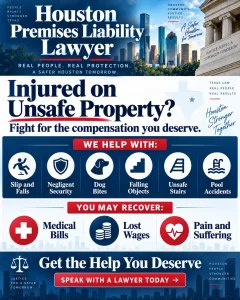
Sufrir lesiones debido a la falta de seguridad en una propiedad plantea interrogantes que la mayoría de las personas nunca se han planteado. ¿Quién es realmente el responsable? ¿Qué sabía el propietario? ¿Tomará en serio la compañía de seguros la reclamación o la tratará como una molestia para denegarla? Un abogado de responsabilidad civil por accidentes en propiedades en Houston, de Joe I. Zaid & Associates, representa a residentes y visitantes de Houston que han sufrido lesiones tras caídas, incidentes de seguridad negligentes, fallas estructurales y otras condiciones inseguras en propiedades, ya sean supermercados, complejos de apartamentos, hoteles o lugares de trabajo controlados por una empresa distinta al empleador de la persona lesionada.
Las reclamaciones por responsabilidad de las instalaciones a menudo son desestimadas por las aseguradoras antes de que se tomen en serio. Una tienda puede alegar que desconocía el peligro. Una empresa de administración de propiedades puede alegar que la persona lesionada no estaba prestando atención. Joe I. Zaid & Associates trabaja para determinar qué sabía el propietario, cuándo lo supo y por qué ese conocimiento generó una obligación legal de actuar. Ofrecemos consultas gratuitas a las personas que resultaron heridas en propiedades inseguras en Houston y en toda la zona circundante.
¿Por qué elegir a nuestros abogados de responsabilidad civil por accidentes en propiedades en Houston?
Antes de fundar nuestra empresa en 2013, joe zaid Trabajé casi una década en el sector de los seguros. Esta experiencia influye en la forma en que nuestra firma aborda las reclamaciones por responsabilidad civil en propiedades, ya que estos casos suelen involucrar a una aseguradora de responsabilidad civil general, y a veces a varias, que deciden cuánto riesgo están dispuestas a asumir antes de que el caso llegue a los tribunales. Joe comprende cómo estas aseguradoras evalúan la notificación, disputan la causalidad y calculan las ofertas de liquidación iniciales diseñadas para cerrar una reclamación de forma rápida y económica.
Joe I. Zaid & Associates ha representado a miles de clientes lesionados y ha recuperado millones de dólares en acuerdos, incluyendo numerosos resultados de siete cifras, y la firma tiene más de 1.500 reseñas de cinco estrellas en Google. a través de sus cuatro oficinas en el área de Houston. Esa reputación se extiende específicamente al trabajo de responsabilidad de locales. En un caso, un escalón de construcción sin señalizar en la entrada de un supermercado atrapó el carrito de compras de una clienta, fracturándole el pie. En lugar de aceptar la posición inicial de la tienda, nuestra firma demandó tanto a la tienda como al contratista responsable del peligro no señalizado y obtuvo una Liquidación de responsabilidad civil por daños en las instalaciones por valor de $85,000 al identificar a más de una parte responsable. Los resultados anteriores dependen de las circunstancias específicas de cada caso y no garantizan un resultado similar en ningún caso futuro.
Joe Zaid es un abogado con licencia en Texas, graduado de la Facultad de Derecho del Sur de Texas en Houston. Fue seleccionado para Super Lawyers en 2026 y es miembro activo de la Asociación de Abogados Litigantes de Houston y de la Asociación de Abogados Litigantes de Texas. El enfoque de nuestro bufete está centrado en el cliente: comprender cómo una lesión ha afectado realmente la vida de una persona, no solo tramitar un expediente de reclamación.
Lo que exige la ley de responsabilidad civil por daños en propiedades en Texas
Una demanda por responsabilidad civil por accidentes en propiedades ajenas no se presenta automáticamente solo porque un accidente haya ocurrido en la propiedad de otra persona. La ley de Texas exige probar que el propietario u ocupante de la propiedad tenía una obligación legal, la incumplió y causó la lesión como consecuencia de ello.
El deber del propietario depende del motivo por el que usted estaba allí.
En Texas, los visitantes se dividen en tres categorías legales, y la obligación del propietario cambia según la categoría a la que corresponda.
Invitados Se considera que una persona puede entrar en una propiedad con el conocimiento del propietario, con un propósito que beneficie a ambas partes, como un cliente que compra en una tienda o un residente que visita una oficina de alquiler. Los propietarios tienen el deber de velar por la seguridad de los visitantes: deben inspeccionar la propiedad en busca de peligros y reparar o advertir sobre cualquier condición peligrosa que conozcan o que debieran haber descubierto mediante una inspección razonable.
Licenciatarios Pueden entrar con permiso, pero principalmente para sus propios fines, como por ejemplo, como invitados. El propietario solo tiene que advertir al titular de la licencia sobre los peligros que conoce, no sobre aquellos que una inspección razonable habría revelado.
Intrusos Por lo general, reciben la menor protección legal. La única obligación real del propietario es no perjudicar a un intruso intencionalmente o con imprudencia temeraria respecto a su seguridad.
La mayoría de las reclamaciones por responsabilidad civil en Houston involucran a invitados, ya que suelen surgir de clientes, inquilinos, huéspedes de hoteles o trabajadores que se encuentran legalmente en una propiedad comercial. Esta condición es importante porque determina qué debe probar la reclamación.
Demostrar que el propietario sabía, o debería haber sabido
Por lo general, quien recibe una invitación debe demostrar que el propietario tenía conocimiento real o implícito del peligro. El conocimiento real implica que alguien vinculado a la propiedad ya conocía el peligro, a menudo porque se había informado previamente o había causado un incidente anterior. El conocimiento implícito implica que el peligro existía desde hacía el tiempo suficiente como para que una inspección rutinaria razonable lo hubiera detectado.
El conocimiento previo suele ser el elemento más difícil de probar, y es donde se deciden muchas reclamaciones por responsabilidad civil. Un charco que se formó treinta segundos antes de una caída es un caso muy diferente a un charco que permaneció sin limpiar durante dos horas. Las grabaciones de vigilancia, los registros de mantenimiento y los programas de inspección de los empleados suelen ser la prueba decisiva en este caso.
La defensa “abierta y obvia”
En general, la ley de Texas no exige que el propietario de una propiedad advierta o proteja a un visitante de una condición peligrosa que sea evidente o que ya sea conocida por la persona lesionada. Esto puede invalidar el deber de protección en una demanda por responsabilidad civil por daños en la propiedad. Sin embargo, a menudo surgen disputas sobre si una condición era realmente evidente dadas las circunstancias, y Texas reconoce excepciones limitadas en ciertas situaciones. La iluminación, la visibilidad, la distribución del entorno y lo que la persona lesionada razonablemente pudo haber observado pueden ser factores importantes al evaluar el caso.
Tipos comunes de reclamaciones por responsabilidad civil de locales en Houston
La responsabilidad civil por accidentes en propiedades ajenas abarca una amplia gama de situaciones que van más allá de una simple caída. Nuestros abogados de Houston especializados en responsabilidad civil por accidentes en propiedades ajenas manejan reclamaciones relacionadas con:
Accidentes por resbalones y caídas En tiendas minoristas, supermercados y restaurantes, las reclamaciones por responsabilidad de locales siguen siendo las más comunes. Los suelos mojados, los productos derramados y los suelos irregulares generan la mayoría de estos casos. Debido a que las reclamaciones por resbalones y caídas plantean sus propios problemas específicos de evidencia y notificación, nuestra firma mantiene un equipo especializado. Abogado especializado en resbalones y caídas en Houston recurso que profundiza en cómo se construyen esas afirmaciones, incluyendo demandas contra grandes cadenas de supermercados como HEB.
Seguridad negligente Las demandas por negligencia surgen cuando el propietario de un inmueble no proporciona medidas de seguridad razonables, como iluminación adecuada, cerraduras en buen estado o personal de seguridad, en un lugar donde era previsible la actividad delictiva. Estas demandas pueden presentarse en complejos de apartamentos, estacionamientos y locales de entretenimiento. Los casos de negligencia en seguridad requieren demostrar que el propietario sabía o debería haber sabido de un patrón de incidentes previos, lo cual implica una investigación diferente a la de una demanda típica por caída.
Fallos estructurales, Los derrumbes de techos y cielorrasos, fallas en balcones y defectos en escaleras pueden causar lesiones catastróficas y apuntan a una negligencia en el mantenimiento a largo plazo en lugar de un solo error aislado. Nuestra firma ha abordado por separado lesiones por derrumbe de techo y cielo raso porque estas reclamaciones suelen implicar defectos de construcción o reparaciones postergadas que requieren su propia documentación.
Lesiones sufridas en piscinas y eventos deportivos. Suceden en complejos de apartamentos, hoteles y fiestas privadas en piscinas en toda el área de Houston, particularmente cuando la supervisión, el cercado o el equipo de seguridad no cumplen con lo que se espera que proporcionen los propietarios. Nuestra firma ha manejado Reclamaciones por lesiones en fiestas en la piscina que implica tanto la responsabilidad del anfitrión como la negligencia a nivel de la propiedad.
Condiciones de hoteles y alquileres a corto plazo, incluyendo escaleras mal mantenidas, ascensores que no funcionan y una iluminación inadecuada en las áreas de estacionamiento, crean una exposición a responsabilidad de las instalaciones que difiere de una reclamación minorista estándar porque los hoteles a menudo involucran estructuras de propiedad corporativa más grandes y compañías de administración superpuestas. Nuestra firma ha representado a huéspedes lesionados por Reclamaciones por resbalones y caídas en hoteles.
Lesiones sufridas por trabajadores en propiedad ajena Esto plantea una pregunta que muchos trabajadores lesionados nunca se plantean: si la cobertura de compensación laboral de su empleador es la única fuente de indemnización disponible. Si un trabajador se lesiona debido a un riesgo controlado por una empresa distinta a su empleador, como un operador de almacén, un contratista general o el propietario de una propiedad, puede existir una reclamación de responsabilidad civil por las instalaciones junto con cualquier beneficio de compensación laboral. Nuestro bufete ha escrito específicamente sobre Cómo se aplica la responsabilidad de las instalaciones cuando los trabajadores resultan heridos en una propiedad que su empleador no controla, y ha representado a trabajadores lesionados en grandes instalaciones, incluidos casos que involucran Reclamaciones por lesiones en almacenes de Amazon.
Cómo el panorama inmobiliario de Houston influye en estas afirmaciones
Houston no cuenta con un único corredor céntrico que concentre el riesgo de responsabilidad civil por locales. Posee varios distritos comerciales geográficamente separados, cada uno con una combinación de propiedades distinta. El centro y la zona alta combinan una alta concentración de oficinas, hoteles, restaurantes y estacionamientos con un intenso tránsito peatonal. El Centro Médico de Texas crea un entorno particular, centrado en los campus hospitalarios, el estacionamiento para visitantes y el constante movimiento de pacientes y personal. Los aeropuertos de Houston, el Intercontinental George Bush y el Hobby, suman estacionamientos, centros de alquiler de autos y hoteles, con sus propios problemas de responsabilidad civil relacionados con el tráfico comercial y los proveedores externos. Mientras tanto, grandes corredores comerciales, de supermercados, apartamentos y usos mixtos se extienden por el resto del área metropolitana, desde el Corredor Energético hasta barrios alejados del Loop 610.
Esa diversidad es importante porque la parte responsable y la cobertura de seguro aplicable suelen variar según el tipo de propiedad. Un riesgo en un restaurante independiente requiere una investigación muy distinta a la de un riesgo en una cadena minorista nacional que alquila un local dentro de un centro comercial más grande, donde el propietario, el inquilino y un contratista de mantenimiento pueden compartir cierto grado de responsabilidad.
Cuestiones de seguros que influyen en una reclamación por responsabilidad civil de las instalaciones
Las reclamaciones por responsabilidad civil de locales suelen estar vinculadas a una póliza de responsabilidad civil general, en lugar del seguro de automóvil al que la mayoría de la gente está acostumbrada, y esa diferencia influye en cómo se gestiona la reclamación. Las grandes cadenas minoristas y las empresas de gestión inmobiliaria suelen tener una cobertura sustancial, pero sus aseguradoras también tienden a defender las reclamaciones con mayor agresividad que una aseguradora de automóviles típica, en parte porque una indemnización por responsabilidad civil de locales puede afectar a la forma en que la aseguradora fija el precio de la cobertura en toda una cadena de establecimientos.
En estas reclamaciones surgen repetidamente varios problemas relacionados con los seguros:
- Múltiples partes potencialmente responsables. El propietario de un inmueble, un negocio inquilino, un contratista de mantenimiento y, en ocasiones, una empresa de seguridad pueden tener pólizas separadas, y determinar qué póliza cubre los siniestros y en qué proporción puede afectar significativamente el valor de una reclamación.
- Reserva de derechos. Una aseguradora puede investigar una reclamación reservándose el derecho de denegar la cobertura posteriormente, lo que puede retrasar una resolución justa si el problema no se identifica y se aborda a tiempo.
- Declaraciones grabadas. En ocasiones, las aseguradoras de bienes solicitan una declaración grabada poco después de un incidente, a menudo antes de que la persona lesionada tenga una idea clara de sus lesiones o de todas las circunstancias del peligro.
- Disputas sobre el tratamiento y la causalidad. Las aseguradoras pueden argumentar que la lesión existía antes del incidente o que una interrupción en el tratamiento debilita la relación entre la caída y la lesión.
La experiencia de Joe Zaid en el sector de los seguros proporciona a nuestra firma información valiosa sobre cómo estas aseguradoras evalúan los riesgos y deciden cuándo aumentar una oferta de acuerdo, lo que influye en la forma en que nuestra firma negocia en nombre de un cliente desde el inicio de un caso.
Cómo nuestros abogados de responsabilidad civil por accidentes en propiedades en Houston investigan un caso
Las pruebas en una reclamación por responsabilidad civil de las instalaciones pueden desaparecer rápidamente. Las grabaciones de vigilancia suelen sobrescribirse en cuestión de días o semanas, a menos que alguien solicite específicamente que se conserven. Enviamos cartas de conservación con antelación para solicitar que se conserven las grabaciones y los registros pertinentes, y trabajamos para recopilar:
- Imágenes de vigilancia de la propiedad y de los negocios cercanos.
- Informes de incidentes o accidentes generados en el momento de la lesión.
- Registros de mantenimiento, limpieza e inspección
- Nombres y declaraciones de los testigos
- Fotografías del peligro y de la zona circundante.
- Registros médicos que vinculan la lesión con el incidente.
No siempre se dispone de un informe formal de incidentes o un vídeo claro. En un caso, una clienta tropezó con unas colchonetas dejadas cerca de la entrada de un gimnasio, fracturándose las costillas y la pelvis, sin que se hubiera realizado ningún informe formal en ese momento. Nuestro bufete, aun así, construyó la reclamación basándose en los testimonios de los testigos disponibles y consiguió una indemnización. Acuerdo por resbalón y caída de $90,000. La falta de documentación dificulta la presentación de una reclamación, pero no implica automáticamente la ausencia de fundamento. Como en cualquier caso, este resultado refleja las circunstancias específicas y no garantiza un resultado similar en otro asunto.
Cuánto puede valer una reclamación por responsabilidad civil de las instalaciones
Las lesiones por responsabilidad de las instalaciones varían ampliamente en gravedad, al igual que la indemnización que se puede obtener. Las caídas suelen causar fracturas, traumatismos craneoencefálicos y lesiones de espalda o columna vertebral que pueden requerir tratamiento prolongado o cuidados a largo plazo. La indemnización en una reclamación por responsabilidad de las instalaciones puede incluir:
- Gastos médicos, tanto pasados como futuros razonablemente previstos.
- Pérdida de ingresos por ausencia del trabajo
- Disminución de la capacidad de generar ingresos en el futuro si la lesión afecta la capacidad de trabajar a largo plazo.
- Dolor y sufrimiento
- Daños a la propiedad, cuando corresponda
El valor de una reclamación específica depende de la gravedad de la lesión, la solidez de las pruebas de responsabilidad, la cobertura del seguro disponible y cómo la lesión ha afectado la vida diaria y la capacidad laboral de la persona. No hay dos reclamaciones por responsabilidad civil de las instalaciones que se valoren de la misma manera, y cualquier estimación monetaria específica antes de que se haya evaluado un caso debe tratarse con cautela.
Culpa comparativa y otras cuestiones que afectan a estas reclamaciones
Los propietarios y sus aseguradoras a menudo intentan culpar a la persona lesionada, por lo que es importante comprender cómo se manejan los asuntos de culpa compartida en Texas antes de decidir si se acepta una oferta de acuerdo anticipado.
¿Qué pasa si tuve parte de culpa? Texas aplica un sistema de responsabilidad proporcional. Una persona lesionada puede recibir una indemnización siempre que su porcentaje de responsabilidad sea del 50% o menos, aunque la indemnización se reduce en ese porcentaje. Una persona considerada responsable en más del 50% no puede recibir ninguna indemnización. Sección 33.001 del Código de Procedimiento Civil y Remedios de Texas. Las aseguradoras suelen exagerar la responsabilidad que se le atribuye a la persona lesionada al inicio de una reclamación, por lo que resulta fundamental realizar una investigación precisa sobre la responsabilidad.
¿Qué ocurre si no hay informe del incidente ni testigos? Como demuestra el caso $90,000 mencionado anteriormente, aún se puede fundamentar una reclamación en las pruebas disponibles incluso sin un informe formal, aunque cuanto antes comience una investigación, más pruebas suelen estar disponibles.
¿Una mordedura de perro se considera responsabilidad civil del propietario? Las mordeduras de perro pueden superponerse con la responsabilidad de las instalaciones cuando una condición de la propiedad o la negligencia del propietario al no tomar medidas contra un animal peligroso conocido contribuye a la lesión, pero Texas generalmente trata las reclamaciones por mordeduras de perro bajo un conjunto de reglas legales relacionadas pero distintas. Nuestra firma mantiene una separada Abogado de mordeduras de perro en Houston recurso para esas afirmaciones específicamente.
¿Y si la lesión fuera mortal? Un colapso estructural, un incidente de seguridad negligente o una caída grave pueden dar lugar a una demanda por muerte por negligencia, además de, o en lugar de, una demanda estándar por responsabilidad de las instalaciones. La ley de Texas permite que ciertos miembros de la familia presenten una demanda por muerte por negligencia. demanda de muerte por negligencia cuando la negligencia del propietario de una propiedad causa una lesión mortal.
Plazos para presentar reclamaciones por responsabilidad civil en Texas
En general, Texas exige que una persona lesionada presente una demanda por responsabilidad de las instalaciones dentro de los dos años siguientes a la fecha de la lesión, según Sección 16.003 del Código de Procedimiento Civil y Recursos de Texas. Incumplir este plazo puede invalidar definitivamente una reclamación, independientemente de la solidez de las pruebas. Algunas circunstancias pueden afectar a la aplicación de este plazo, razón por la cual conviene recabar pruebas cuanto antes, en lugar de esperar a que se acerque la fecha límite.
Qué hacer después de un accidente por responsabilidad civil en una propiedad.
Las medidas tomadas en las horas y días posteriores a una lesión en la propiedad de otra persona pueden afectar significativamente la reclamación posterior. Si es posible:
- Informe del incidente al administrador de la propiedad, al personal de la tienda o a otra parte responsable y solicite una copia de cualquier informe generado.
- Fotografie el peligro, el área circundante y cualquier lesión visible antes de que cambien las condiciones.
- Obtén la información de contacto de cualquier testigo.
- Busque atención médica, incluso si la lesión no parece grave de inmediato, ya que algunas lesiones, en particular las de cabeza y columna vertebral, no son evidentes de inmediato.
- Evite dar una declaración grabada a la aseguradora del propietario antes de hablar con un abogado.
Nuestra firma ha escrito una guía más detallada sobre Qué hacer después de un resbalón y caída en la propiedad de otra persona. que explica estos pasos con mayor detalle.
Preguntas frecuentes
¿Qué necesito probar en un caso de responsabilidad civil por daños en propiedades en Texas?
En general, que el propietario de la propiedad tenía un deber basado en su condición legal de visitante, que tenía conocimiento real o implícito del peligro, que no lo reparó ni advirtió sobre él, y que esta omisión causó su lesión. Nuestra firma ha cubierto la Elementos legales de un caso de resbalón y caída con más detalle.
¿Aún puedo presentar una demanda si el propietario dice que el peligro era obvio?
Posiblemente. La descripción del propietario no determina la cuestión por sí sola. En general, Texas no impone la obligación de advertir a un invitado sobre una condición que era evidente o que ya conocía, pero si una condición cumple con ese estándar puede depender de las circunstancias específicas.
¿Qué ocurre si no estoy seguro de que el propietario de la propiedad siquiera supiera del peligro?
El conocimiento implícito, es decir, que el peligro existió durante el tiempo suficiente como para que una inspección razonable lo hubiera detectado, puede satisfacer este requisito incluso sin pruebas de que el propietario lo hubiera notado previamente. Este suele ser el punto central en una investigación sobre responsabilidad civil por daños en propiedades.
¿Necesito un abogado si la tienda ya me ofreció un acuerdo?
Una oferta inicial de la aseguradora del propietario suele reflejar la cantidad mínima que consideran necesaria para resolver el siniestro rápidamente, antes de conocer la gravedad total de la lesión o la cobertura del seguro disponible. Revisar la oferta antes de aceptarla puede ayudar a determinar si refleja el valor real del siniestro.
¿Qué pasaría si me lesionara en el trabajo pero el objeto no fuera propiedad de mi empleador?
Una reclamación de indemnización laboral a través de su propio empleador no cubre automáticamente un riesgo controlado por otra empresa, como el propietario del inmueble, el contratista general u otro negocio en el lugar. En ese caso, podría ser posible presentar una reclamación independiente por responsabilidad civil del inmueble.
Hable con un abogado especializado en responsabilidad civil por accidentes en propiedades en Houston.
Joe I. Zaid & Associates representa a clientes lesionados en toda el área de Houston desde cuatro oficinas: centro de Houston, Pasadena, Humble y Clear Lake. Cualquier persona lesionada debido a que una propiedad no se mantuvo razonablemente segura puede comunicarse con nuestra firma. Oficina en el centro de Houston al (346) 340-0800, o conéctese a través del Pasadena, Humilde, o lago claro ubicaciones.
Ofrecemos un evaluación de caso gratuita y sin compromiso y trabajar en un base de honorarios de contingencia, por lo que no hay honorarios de abogado a menos que nuestra firma obtenga una compensación para usted. Cualquier persona que desee hablar sobre un accidente por responsabilidad de las instalaciones puede Comuníquese directamente con Joe I. Zaid & Associates. Para empezar y revisar el pasado resultados del caso en todas las áreas de práctica de nuestra firma.