In most situations, Texas drivers are not required to give a recorded statement to the at-fault driver’s insurance company. An adjuster may call within a few days of a crash and ask for one, but Texas law does not force an injured driver to comply.
That distinction matters. A recorded statement becomes part of the permanent record of a claim. The insurer can replay it, quote it, and compare it against anything said later, including medical records or a second conversation with a different adjuster.
This article explains who can actually require a statement, what these calls typically cover, and what to do if a statement has already been given.
Why an Adjuster Wants a Recorded Statement Early
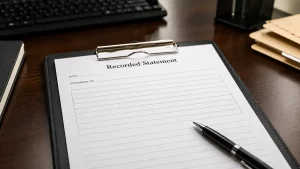
An adjuster’s job is to evaluate a claim in a way that limits what the insurance company pays. A recorded statement gives the adjuster a version of events straight from the injured driver, on the record, before anyone else has reviewed the case.
Adjusters often use recorded statements to:
- Lock in early details about how the crash happened, before all the facts are known
- Look for wording that suggests shared fault
- Get an injured driver to describe injuries as minor before symptoms fully develop
- Compare later statements against the recording to look for inconsistencies
Houston’s mix of commuter traffic on I-45, Beltway 8, and I-10 means many crashes involve more than one driver, disputed fault, or coverage questions that are not obvious right away. When an adjuster calls asking for a statement in that kind of situation, reviewing the request with a Houston car accident lawyer before responding can help clarify what the adjuster may actually be trying to establish.
Does Texas Law Require a Recorded Statement to the At-Fault Driver’s Insurer?
Texas law does not generally require an injured driver to give a recorded statement to the at-fault driver’s insurance company. No statute forces anyone to sit for one of these calls.
The at-fault driver’s insurer has no contract with the injured driver. Its adjuster cannot require cooperation the way a person’s own insurer might under their own policy. A driver can decline the request, ask for it in writing, or ask that an attorney be present, depending on the situation.
Your Insurance Company Is a Different Relationship Than the At-Fault Driver’s Insurer
Many injured drivers do not realize these are two very different relationships.
An injured driver’s own insurance policy is a contract. Most policies include a cooperation clause, which can require the policyholder to answer questions or give a statement as part of their coverage. Refusing outright could affect that policyholder’s own benefits.
The at-fault driver’s insurer has no such agreement with the injured driver. Its goal is to protect its own policyholder and control what it pays out. A statement given to that company serves its interests first.
This distinction becomes critical when the at-fault driver has no insurance at all. In a Pasadena, TX case handled by Joe I. Zaid & Associates’ Pasadena car accident attorneys , a client was broadsided by an uninsured 17-year-old driver who turned left directly into his path at an intersection. Because there was no at-fault insurer to negotiate with, the claim moved entirely to the client’s own uninsured motorist coverage, and his own insurance company became the party responsible for paying it. The claim ultimately settled for $435,000 through that policy. Past settlements, including this one, do not guarantee or predict an outcome in a different case, since coverage, injuries, and facts vary.
The case is useful here because it shows a recorded statement request is not always coming from the other side. Sometimes an injured driver’s own insurer is the one asking, and what a policy requires can look very different from what the at-fault driver’s insurer is entitled to.
What Adjusters Typically Ask During a Recorded Statement
Recorded statements tend to follow a similar pattern. Adjusters often ask about:
- How the accident happened, step by step, including speed and distance
- Weather, lighting, and road conditions at the time
- Whether the driver saw the other vehicle before impact
- What injuries were noticed immediately afterward
- Whether the driver has prior accidents, injuries, or medical conditions
- Whether treatment has started, and with which provider
- Whether the driver has missed work because of the crash
Some of these questions sound routine. Others are designed to find gaps between what someone says on the call and what medical records show later. For a broader look at how adjusters approach these conversations, this guide on dealing with car accident adjusters covers tactics beyond recorded statements alone.
How a Routine Answer Can Complicate Fault or Injury Claims
Most people are not trying to hide anything during a recorded statement. That is exactly why these calls carry risk.
Saying “I feel okay” out of politeness can later be used to argue that injuries were not serious. Estimating a speed or distance, without being certain, can be treated as fact rather than a guess. Mentioning an old back injury from years earlier can turn into an argument that current pain is unrelated to the crash.
Once an insurance company builds a narrative around disputed fault or minor injuries, unwinding it can take real work. A recorded statement is often where that narrative starts.
What to Do If a Statement Has Already Been Given
If a statement has already been given, the claim is not automatically over. A few practical steps can help.
Writing down what was said, while it is still fresh, is a good starting point. Note the adjuster’s name, the date, and any specific questions that stood out. Gathering medical records, photos, or witness information can support what actually happened, separate from how the statement was worded.
If the insurance company later disputes fault or downplays the injury, this documentation can help clarify the discrepancy. A past statement is one piece of evidence, not the entire case.
Common Questions About Recorded Statements After a Texas Car Accident
Do I have to give the other driver’s insurer a recorded statement?
No. Texas law does not generally require a recorded statement to the at-fault driver’s insurance company. Their adjuster has no contract with the injured driver, so they cannot force answers the way a person’s own insurer might. A driver can decline the request, ask for it in writing, or wait until speaking with an attorney.
Can my own insurance company require a recorded statement?
It depends on the policy. Most auto policies include a cooperation clause, which can require a statement to the policyholder’s own insurer as part of their coverage. Refusing outright could affect policy benefits, so it helps to know which insurer is actually asking before deciding how to respond.
What happens if I already gave a recorded statement?
Giving a statement does not automatically end a claim. Writing down what was said, noting the date and adjuster’s name, and gathering medical records or other evidence can help clarify any later dispute over fault or injury.
Can an insurance adjuster use my recorded statement against me?
Yes. An adjuster can use a recorded statement to question fault, minimize injuries, or point out inconsistencies with later statements. Even an honest, off-the-cuff answer about how someone feels can be taken out of context.
Should I talk to a lawyer before giving a recorded statement?
Speaking with a lawyer first can clarify what the request is for and what someone is and is not required to say. This is especially useful when fault is unclear, injuries are still developing, or more than one insurance policy may be involved. It does not mean a case is complicated, only that someone is reviewing the request before responding.
When Speaking With an Attorney About a Recorded Statement Makes Sense
Speaking with an attorney early does not mean a case is complicated or contested. It means someone is reviewing the request before answering it, not after.
Joe Zaid spent nearly a decade working inside the insurance industry before founding the firm, which gives Joe I. Zaid & Associates practical insight into how adjusters build a record during these early calls. Anyone who already spoke with an adjuster and is unsure how it may affect their claim can reach out to the firm to go over what was said and review the options going forward.