In most rear-end crashes, the driver who hits the car in front carries the fault. Texas law requires drivers to leave enough space to stop safely, and failing to do that is the most common reason these crashes happen. But that starting point does not settle every case. The driver in front can share or even carry the blame if the facts show they stopped without warning, had broken brake lights, or created the danger some other way.
Because rear-end claims often turn on small details, working out fault matters just as much as knowing who physically hit whom. If you were rear-ended in Texas, or the other driver is trying to shift blame onto you, a Abogado de accidentes por alcance en Houston at Joe I. Zaid & Associates can review the crash report, vehicle damage, and other evidence before you accept an insurance company’s version of what happened.
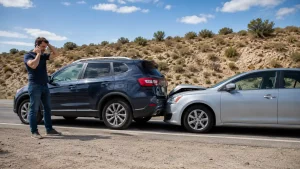
The Trailing Driver’s Duty to Keep a Safe Following Distance
Texas Transportation Code Section 545.062 requires a driver following another vehicle to maintain an assured clear distance. The law says the driver must be able to stop safely without colliding with the vehicle ahead, taking into account speed, traffic, and road conditions.
That standard does not name a fixed number of feet or car lengths. It changes based on how fast traffic is moving, how congested the road is, and whether conditions like rain or low visibility make stopping harder. A distance that works on a clear afternoon might not work during a downpour or in stop-and-go highway traffic.
Because the trailing driver controls their own speed and spacing, police officers and insurance adjusters often start from the assumption that the driver who hit the rear of another vehicle failed to keep a safe distance. That assumption is a useful starting point, not an automatic legal conclusion. Fault still depends on what actually happened, including how the front driver was operating their vehicle in the moments before impact.
When Fault May Shift to the Driver in Front
A rear-end crash does not always mean the trailing driver was careless. Several situations can shift some or all of the fault to the driver in front.
- A sudden stop without a clear reason. Braking hard for no apparent hazard, sometimes called brake-checking, can make a crash difficult for the trailing driver to avoid.
- Non-functioning brake lights. If the lead driver’s brake lights were out, the driver behind may not have had a fair chance to react.
- An abrupt lane change into a following driver’s path. Cutting into a lane with too little space can leave no room to stop.
- An illegal or unexpected stop. Stopping in a live travel lane, reversing on a roadway, or stopping without a working turn signal before a turn can all contribute to a rear-end impact.
- Mechanical failure in the lead vehicle. A vehicle that stalls or loses power unexpectedly can create a hazard the trailing driver never had time to see.
None of these situations automatically clears the trailing driver, and they do not automatically place all the blame on the lead driver either. Texas law allows fault to be divided between multiple drivers based on what the evidence actually shows.
Rear-End Crashes Involving Multiple Vehicles
Fault gets more complicated when a rear-end crash involves three or more vehicles. Houston’s freeway network, including I-45, I-610, and Beltway 8, regularly experiences the kind of extended peak-period congestion documented by Houston TranStar that turns one driver’s mistake into a chain-reaction crash. When traffic compresses quickly during peak periods, a single following driver’s error can push a vehicle into the car ahead, which then strikes another vehicle further up the line.
In these crashes, the driver who set off the chain reaction can be held responsible even for impacts they never directly caused. A vehicle pushed forward into another car did not choose to hit it, so the driver who caused the initial collision may bear responsibility for the resulting impacts down the line. Sorting out which driver’s actions actually caused each collision usually requires a close look at vehicle damage patterns, the sequence of impacts, and any available witness or camera footage.
How Shared Fault Affects What You Can Recover
Texas follows a proportionate responsibility system for civil injury claims. Under Texas Civil Practice and Remedies Code Section 33.001, a person who is found more than 50 percent responsible for an accident cannot recover damages at all. Below that threshold, a person’s compensation is reduced by their own percentage of fault.
This matters in rear-end claims because insurance companies sometimes argue that the injured person shares part of the blame, even in situations that look straightforward. An adjuster might claim you followed too closely as well, or that you contributed to the crash in some other way, in an effort to reduce what they owe. Understanding how Texas divides fault between drivers when more than one person contributed to a crash can help you recognize when a fault argument is fair and when it is being used to lower a valid claim.
Evidence That Helps Establish Fault
Because rear-end fault often comes down to specific facts rather than the mere position of the vehicles, certain types of evidence carry particular weight.
- Vehicle damage patterns. The location and severity of damage can help show the angle and force of impact.
- Photos of brake lights and turn signals. These can support or undercut a reclamo por accidente de coche that a lead driver gave adequate warning before stopping or turning.
- Dashcam or nearby surveillance footage. Video from either vehicle or a nearby business can capture the seconds before impact.
- The police crash report. An officer’s observations and any citations issued at the scene often become an early reference point for fault.
- Witness statements. Drivers or pedestrians nearby may have seen details that are not visible from either vehicle’s own account.
Some of this evidence, particularly surveillance footage, can be deleted or recorded over within days. Requesting it quickly makes it far more likely to still exist by the time a claim is being evaluated.
How Insurance Companies Evaluate Disputed Fault Claims
Insurance companies do not always accept the initial assumption that the trailing driver was at fault, especially when the claim involves a serious injury or a larger payout. An adjuster may look for any evidence that shifts part of the blame onto the injured person, since even a modest shared-fault finding reduces what the insurer has to pay under Texas’s proportionate responsibility rules.
Joe Zaid spent nearly a decade working inside the insurance industry before founding the firm, and that background shapes how the firm approaches disputed fault in rear-end claims. Recognizing how an adjuster is likely to frame a fault argument, and what evidence actually supports or undermines it, can make a meaningful difference in how a claim is negotiated. If an adjuster in your case is pushing back on fault, understanding how car accident adjusters typically evaluate a claim can help you respond with more than just your own account of what happened.
When to Talk to an Attorney About a Rear-End Accident
Many rear-end claims settle without much dispute over fault, particularly when the damage and evidence clearly point to one driver. But when the insurance company questions who was responsible, tries to assign you partial blame, or the crash involved multiple vehicles, the outcome can depend heavily on how well the evidence is gathered and presented.
Joe I. Zaid & Associates works to confirm liability early, before evidence disappears and before an insurance company has already built its own version of events. If you were injured in a rear-end accident and fault is being disputed, the firm offers a free consultation to review what happened and explain your options. The firm handles personal injury claims on a contingency fee basis, so there is no upfront cost to find out where you stand.