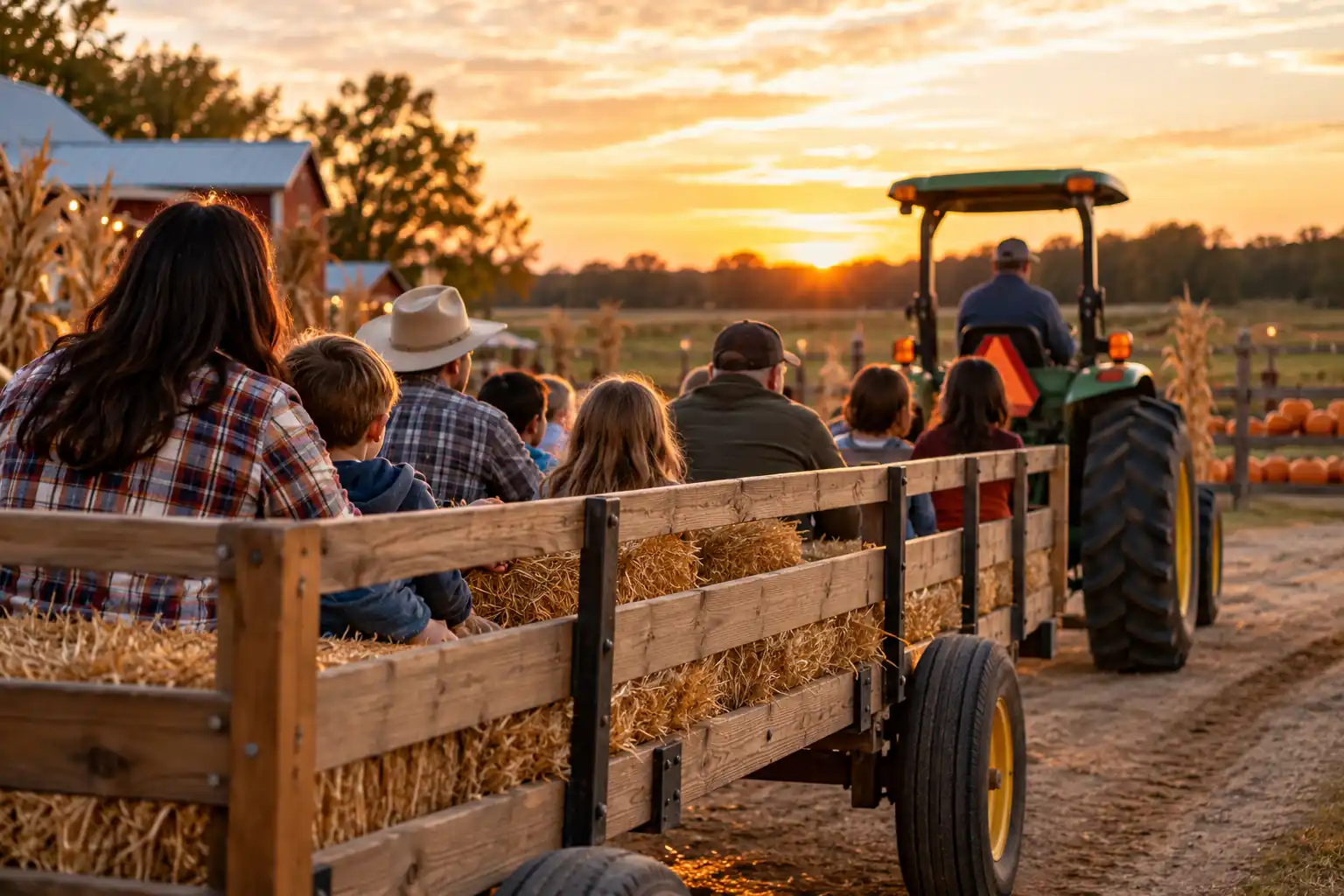
In many cases, yes, you can sue after a hayride accident. Texas law does not give every hayride operator automatic immunity. The Texas Agritourism Act limits an operator’s liability in narrow situations. The operator must have posted a specific warning sign or collected a properly drafted signed agreement. Even then, the protection has exceptions. Claims can still go forward for known hazards, unsafe equipment, poor employee training, and negligence that shows disregard for rider safety.
Whether you have a claim depends on what caused the injury, who controlled that cause, and whether the operator met the statute’s requirements. If a hayride injured you or a family member, we offer free consultations to help you sort through those questions.
How the Texas Agritourism Act Affects a Hayride Injury Claim
Chapter 75A of the Texas Civil Practice and Remedies Code governs liability for agritourism activities. It defines an agritourism activity as a recreational or educational activity on agricultural land, whether or not the participant pays. A hayride at a farm, ranch, or pumpkin patch can fit that definition. The Act excludes the operator’s own employees from the term “participant.”
Two Ways an Operator Earns Protection
The Act shields an agritourism operator from liability for a participant’s injury in only two situations:
- The operator posted and maintained a clearly visible sign on or near the premises, with the heading “WARNING” and the statutory language, when the activity took place.
- The operator obtained a signed written agreement and warning statement covering the activity that caused the injury.
The signed agreement must meet strict rules. The participant must sign it before the activity begins. For a minor, a parent, managing conservator, or guardian signs. The agreement must be a separate document from other contracts, apart from other warnings or consent statements. It must appear in at least 10-point bold type and carry the heading “AGREEMENT AND WARNING” with the required statements. If the operator has neither a compliant sign nor a compliant agreement, this limitation does not apply.
Exceptions That Keep a Claim Alive
Even when an operator meets one of those requirements, the limitation does not apply to an injury proximately caused by any of the following:
- Negligence by the operator that shows disregard for the participant’s safety
- A dangerous condition on the land, facilities, or equipment that the operator knew about or reasonably should have known about
- A dangerous propensity in a particular animal, such as a horse or mule pulling the wagon, if the operator did not disclose it
- The operator’s failure to train, or improper training of, an employee actively involved in the activity
The limitation also does not cover an injury the operator caused intentionally. The statute does not spell out what counts as negligence showing disregard for safety, so these cases turn on specific facts.
Why Not Every Hayride Qualifies
The Act covers activities on agricultural land. A hayride that falls outside that definition, or one run by an operator who skipped the sign and the agreement, gets no protection from this Act. Defendants may also cite the recreational use provisions in Chapter 75 of the same code. Those provisions can limit a landowner’s duty in certain circumstances. Whether they reach a paid hayride depends on the facts. Courts may look at whether the owner charges for entry, carries qualifying liability insurance, and runs an activity that counts as recreation.
Premises Liability or Negligent Operation: Which Claim Fits?
Hayride injuries often involve one of three problems: a dangerous property condition, careless operation of the ride, or failed equipment. The label matters because each theory requires different proof. The Texas Supreme Court has treated premises defects and negligent activity as separate theories, and a single injury generally fits only one.
Premises Liability: A Dangerous Condition on the Property
A premises liability claim targets a hazard the operator failed to fix or warn about. On a hayride, that hazard might be deep ruts or washouts along the route. It could also be an unlit path on an evening ride, a loading step with no support, unstable bale seating, or low branches near the trail.
The injured person must show that the operator knew or should have known about the condition. The condition must have posed an unreasonable risk, and the operator must have failed to use reasonable care to reduce it. Operators often argue that the hazard was open and obvious, because Texas law generally requires owners to warn only about concealed dangers.
Negligent Operation: What the Driver or Crew Does
A negligent activity claim focuses on conduct during the ride itself. Ordinary negligence rules apply, so the injured person must show a duty, a breach, causation, and damages. Common examples include:
- Driving too fast for the terrain or taking sharp turns with standing riders
- Overloading the trailer or seating riders where they can fall
- Driving while impaired or distracted
- Loading or unloading while the trailer is still moving
- Leaving children without adequate supervision or instruction
These facts also connect to the Act’s training exception. A driver who never received safety instruction can support a claim that falls outside the statute’s protection.
Equipment Failures
Hitch and coupling failures, weak brakes, worn tires, and trailers with low or missing sides can all cause serious injuries. Maintenance records can matter a great deal, because they show what the operator knew about the equipment. A defect in design or manufacture may also support a separate claim against the maker or seller of the trailer or tractor part. Lawyers sometimes plead more than one theory when the facts support it.
Who May Be Responsible After a Hayride Accident
A hayride injury rarely traces to one person. Depending on the facts, responsible parties may include:
- The farm or ranch owner or occupant who controlled the property
- A separate business or event organizer that ran the hayride on leased or borrowed land
- The driver and the business that employed the driver
- A contractor that serviced the tractor or trailer
- The manufacturer or seller of a defective trailer, hitch, or tractor component
Identifying every responsible party matters because each may carry separate insurance. Joe I. Zaid & Associates secured an $85,000 settlement in a premises liability case. A store and a construction company might both have shared responsibility for an unmarked hazard. Past results do not guarantee or predict a similar outcome, and every case depends on its own facts.
Do Liability Waivers and Warning Signs Stop a Hayride Claim?
Not automatically. Joe Zaid spent nearly a decade inside the insurance industry. We know an insurer may lead with a signed form or a posted sign to end a claim early. A waiver is a defense the operator must prove, and several limits apply.
The Act’s Formal Requirements
An operator relying on the Agritourism Act must show that the sign or agreement matched the statute. That includes the required wording, placement, type size, and timing. A rider who signed after the ride, or a form buried inside a larger contract, may not meet the standard. The signed agreement covers only the activity it addresses. The exceptions described above also apply whether the operator relies on a sign or a form.
Waivers Outside the Act
When the Act does not apply, Texas courts enforce a release of the operator’s own negligence only if it satisfies the fair notice requirements. The release must state clearly that it covers the operator’s own negligence, and a reasonable person must have been able to notice it. Texas appellate courts have also generally refused to let a pre-injury waiver release gross negligence, though the Texas Supreme Court has not settled that question.
Waivers Signed for Children
Many hayrides carry children, so this question comes up often. A Texas appellate court held that a parent’s waiver did not bar a child’s injury claim at an amusement park. Federal courts have reached similar results in other recreation settings. The Agritourism Act, however, expressly lets a parent or guardian sign for a minor. A Texas A&M AgriLife Extension analysis of parental waivers noted that no court had yet tested that provision. A signed form should not end a child’s claim without a careful legal review.
Compensation Available After a Hayride Injury
The value of a claim depends on the injuries, the proof, and the available insurance. Compensation may include medical bills, future treatment costs, and lost income. It may also include pain and suffering compensation for physical pain, mental anguish, and lasting limitations.
If a hayride accident kills someone, Chapter 71 of the Civil Practice and Remedies Code lets the surviving spouse, children, and parents bring the action. In that situation, a wrongful death claim lets the family seek compensation for the loss.
Texas also allows exemplary damages, often called punitive damages, when harm results from gross negligence. The plaintiff must prove it by clear and convincing evidence, and state law caps the award. Gross negligence requires proof that the operator knew of an extreme risk and proceeded anyway.
Operators often blame riders for standing, jumping off, or horseplay. Texas applies comparative negligence rules. Under Section 33.001, a person more than 50 percent responsible cannot recover. Below that line, the court reduces the award by the person’s share of fault.
Deadlines and Evidence After a Hayride Injury
Texas generally gives injured people two years to file a personal injury lawsuit. In a death case, the two years run from the date of death. The clock for an injured minor generally does not start until age 18. Texas statutes of limitations for personal injury claims include exceptions, so confirm your deadline early.
Because the Act turns on the sign and the form, document both while you still can:
- Photos of any warning sign, including its wording, size, location, and lighting
- A copy or photo of any form you or a parent signed, and when you signed it
- The route, ruts, loading steps, seating, trailer sides, hitch, and tires
- Names of the driver, staff, and other riders, along with any phone video
- Weather and lighting conditions, plus all medical records
Operators may repair a trailer, replace a sign, or regrade a path soon after an accident. We may send preservation letters when evidence could disappear. Those letters can ask the operator to keep maintenance records, driver information, incident reports, and video.
When to Talk With a Lawyer About a Hayride Injury
A hayride claim often involves a statute, a signed form, and an insurer all at once. Joe I. Zaid & Associates handles injury cases on a contingency basis, so there are no attorney fees unless we recover compensation. Call us for a free consultation if you have questions about your options after a hayride accident.