
After a motorcycle accident in Texas, get to safety, call 911, and get a medical evaluation even if you feel fine. Report the crash to police, photograph the scene and your gear before anything gets repaired or thrown away, and be careful about what you say to the other driver’s insurance company. These steps protect your health first, and they also preserve the evidence that often decides whether a motorcycle claim gets a fair review.
Motorcycle crashes tend to draw more skepticism from insurers than car accidents do, partly because a motorcycle can show little visible damage even when the rider suffered a serious injury. What you do, and document, in the hours and days after a crash can shape how that skepticism plays out.
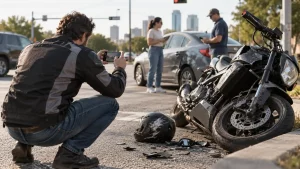
Move to Safety and Call 911
If you can move without making an injury worse, get yourself and the motorcycle out of traffic. Call 911 right away, even if the crash seems minor. Adrenaline can mask pain immediately after impact, and a 911 call brings both medical responders and a police officer who can begin documenting how the crash happened.
If you cannot move safely, stay where you are and wait for help. Do not try to walk off an injury or push through pain to clear the road.
Report the Crash to Police
Texas law generally requires drivers involved in a crash that causes injury, death, or vehicle damage serious enough that a vehicle cannot be driven away safely to notify police immediately, under Texas Transportation Code Section 550.026. Most motorcycle crashes that involve any real impact will meet that standard, so it is usually safest to assume a report is required rather than assume it is not.
When police arrive, give an accurate account of what happened without guessing at details you are not sure of. Ask for the responding officer’s name and the report or case number before they leave, since you will likely need that information for insurance purposes later. You are also required to exchange your name, insurance information, and driver’s license with the other driver at the scene.
Get Medical Care Even if You Feel Fine
Motorcycle crashes can cause fractures, road rash, and head or neck injuries that are not obvious right away. Adrenaline and shock can delay pain for hours, and some injuries, including concussions and soft tissue damage, get worse before they get better.
Seeing a doctor immediately after the crash, even if it is only for an evaluation, creates a medical record that connects your injuries to the collision. If you wait days or weeks to seek treatment, an insurance adjuster may later argue that something other than the crash caused your symptoms. That argument becomes harder to make when your medical records start the same day as the accident.
Document the Scene While the Evidence Still Exists
If you are physically able, take photos of the crash scene before vehicles are moved, including the position of both vehicles, skid marks, debris, road conditions, and any traffic signs or signals nearby. Photograph your motorcycle’s damage, your riding gear, and any visible injuries. A damaged helmet or torn riding jacket can carry real weight later, particularly since a motorcycle crash sometimes leaves the other vehicle with only minor scrapes while the rider suffers a serious injury.
Get the names and phone numbers of anyone who saw the crash happen. Witness accounts tend to be hardest to gather the longer you wait, and witnesses are often willing to talk at the scene but harder to reach once they have left.
This kind of documentation matters more in motorcycle claims than in most car accident claims. Drivers frequently tell police they never saw the motorcycle before impact, and insurers sometimes assume a rider was speeding or lane-splitting before any facts are reviewed. Because that assumption can shape an entire claim before the evidence is collected, the photos, gear, and witness information gathered in the first hours after a crash often determine how effectively a Texas motorcycle accident attorney can later push back on a driver’s version of events.
Watch What You Say to the Other Driver and to Insurers
It is natural to want to say something reassuring at the scene of a crash, but avoid saying anything that could be read as an admission of fault, even something as simple as apologizing out of instinct. What you say in those first minutes can end up in a police report or an insurance file, and it can be used to argue that you share more responsibility for the crash than you actually do.
You are also likely to hear from the other driver’s insurance company within a few days, sometimes asking for a recorded statement. It can feel like a routine, cooperative step, but the questions are often designed to build a record on liability or injury severity that works in the insurer’s favor. If you are unsure whether to give a recorded statement, it is reasonable to think it through, or speak with an attorney, before agreeing to one.
Notify Your Own Insurance Company
Most policies require you to report a crash to your own insurer within a reasonable time, regardless of who was at fault. Give them the basic facts of what happened. You do not need to speculate about fault, estimate your injuries, or agree to a recorded statement with your own carrier before you understand how the claim is likely to unfold, particularly if you are still waiting on a full medical evaluation.
Keep Records as the Claim Moves Forward
Save copies of the police report, medical bills, treatment records, repair estimates, and any correspondence with insurance adjusters. If your injuries keep you out of work, keep documentation of missed time and lost income as well. Insurance companies often make an early settlement offer before a rider’s full medical picture is known, and having organized records makes it easier to show that an early number does not reflect the actual cost of the crash.
When the Situation May Call for a Motorcycle Accident Attorney
Not every motorcycle accident requires a lawyer. A minor, low-speed incident with no injuries and a cooperative insurer may resolve on its own. Legal help tends to matter more when fault is disputed, the other driver has little or no insurance, your injuries require ongoing treatment, or an adjuster seems more focused on your riding than on how the crash actually happened.
Joe Zaid spent nearly a decade working inside the insurance industry before founding the firm, and that background shapes how our attorneys evaluate a motorcycle claim, including how adjusters try to shift blame onto a rider or minimize injuries that are not immediately visible. If you are still deciding whether you need a lawyer after a motorcycle accident in Texas, a free consultation costs nothing and can clarify where you stand before you make any decisions about the claim.
If you were injured in a motorcycle accident in Texas, Joe I. Zaid & Associates offers consultas gratuitas y trabaja en un no fee unless we recover compensation basis.